

Tree and Plant Health Care in Columbia and Mid-Missouri
designed to protect, strengthen, and preserve trees across your landscape
We offer proactive tree care that keeps your trees strong before problems start and treats them when something goes wrong. At Ratliff Tree, our Plant Health Care programs are led by Board Certified Master Arborist Philip King and built specifically for the trees that grow in Columbia and across Mid-Missouri.
What Is Plant Health Care?
Plant Health Care, often shortened to PHC, means caring for a tree before it shows signs of trouble and responding quickly when it does.
Our focus is on preserving and strengthening trees through proactive care, improved soil conditions, stress reduction, and targeted treatments rather than waiting for decline or failure.
Most people call us when they already have a problem. Their tree looks sick, or a nearby tree has died and they do not want to lose another one. Whether you are seeing a few dead leaves or a tree in serious decline, our goal is to solve the root problem behind the tree problem.

Signs Your Tree Needs a Closer Look
Tree problems often build for a while before they are easy to see. If you notice any of the signs below, it is worth having a certified arborist take a look.
- Branches that are dying back, or a canopy that looks thinner each year. General decline is the most common reason homeowners call us.
- Fall color in the middle of summer, especially on one side of a maple, or dark and oozing spots near the base of the trunk.
- Leaves that look lacy between June and August, which is the calling card for pest problems.
- A honeylocust that turns brown and webbed from the top down in late summer, which is a sign of mimosa webworm.
- Spruce or other confiers that are thinning or changing color, which often means needle cast or another evergreen disease.
- An ash tree with sparse leaves or dying branches in the upper canopy, which can signal Emerald Ash Borer.
What Not to Do When a Tree Is Struggling
When a tree starts to struggle, most homeowners assume it needs more water and begin to overwater it. Others pick up fertilizer from a big box store in the hope that it will save the tree. Both reactions are understandable, but these go-to fixes can hurt the long-term health of the tree. Trimming is another common default, and it does not solve a health problem that has not been diagnosed. That is why we start with an evaluation by a certified arborist before we recommend any treatment.
Not sure what you're looking at?
Read our guide on how to tell if a tree is dying to understand the warning signs.
Our Tree Health Programs
Deep Root Feeding
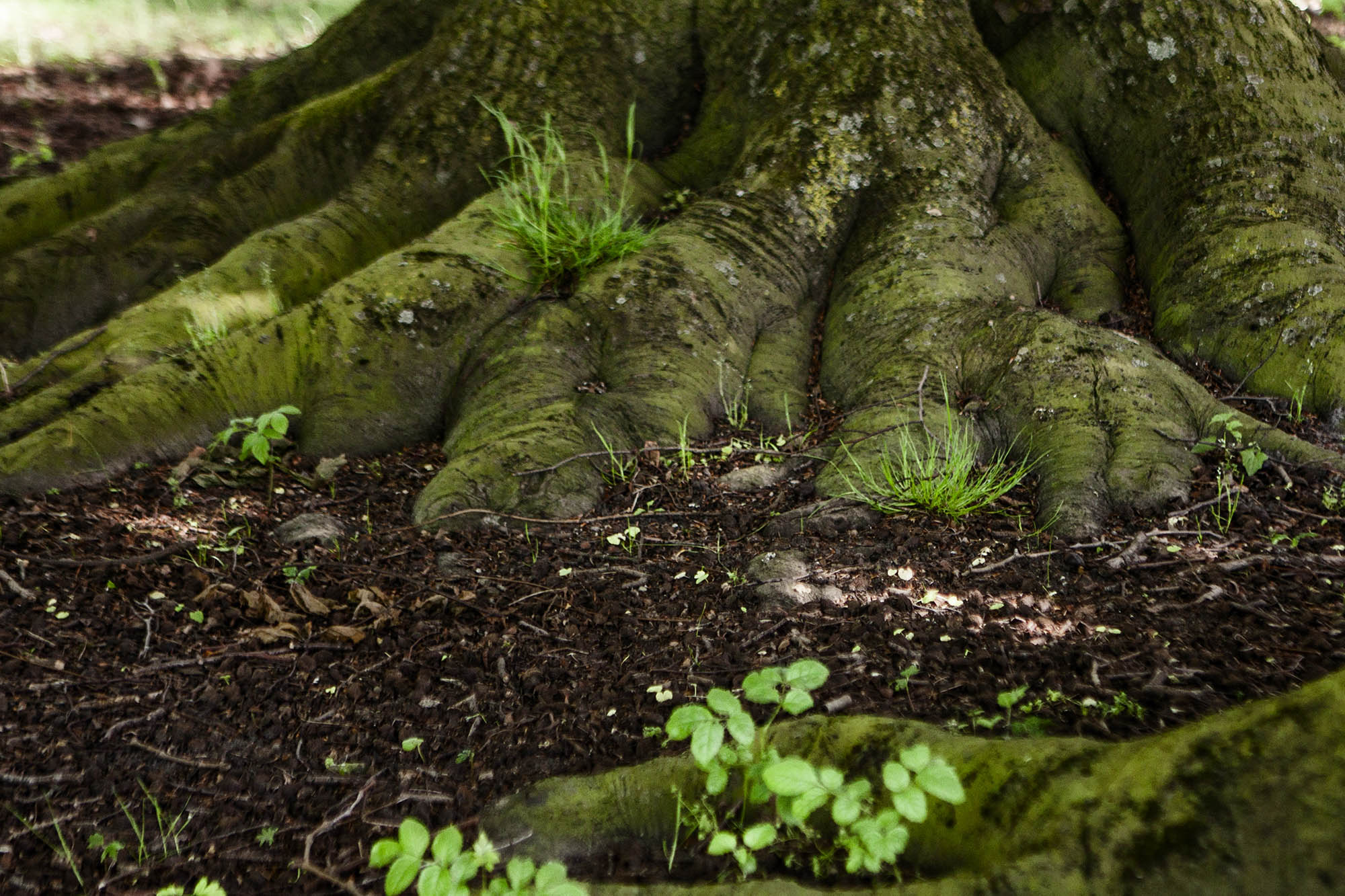
Deep root feeding delivers nutrients and soil amendments directly into the active root zone of trees, bypassing compacted surface soils and turf competition. This creates healthier soil conditions and improves root function. (You may also see this service called deep root fertilization.)
We usually apply these treatments in spring and fall, and urgent treatments can happen at nearly any time of year. Deep root feeding is a great yearly maintenance treatment for young, mature, and advanced-age trees.
Fungicide and Pest Treatment
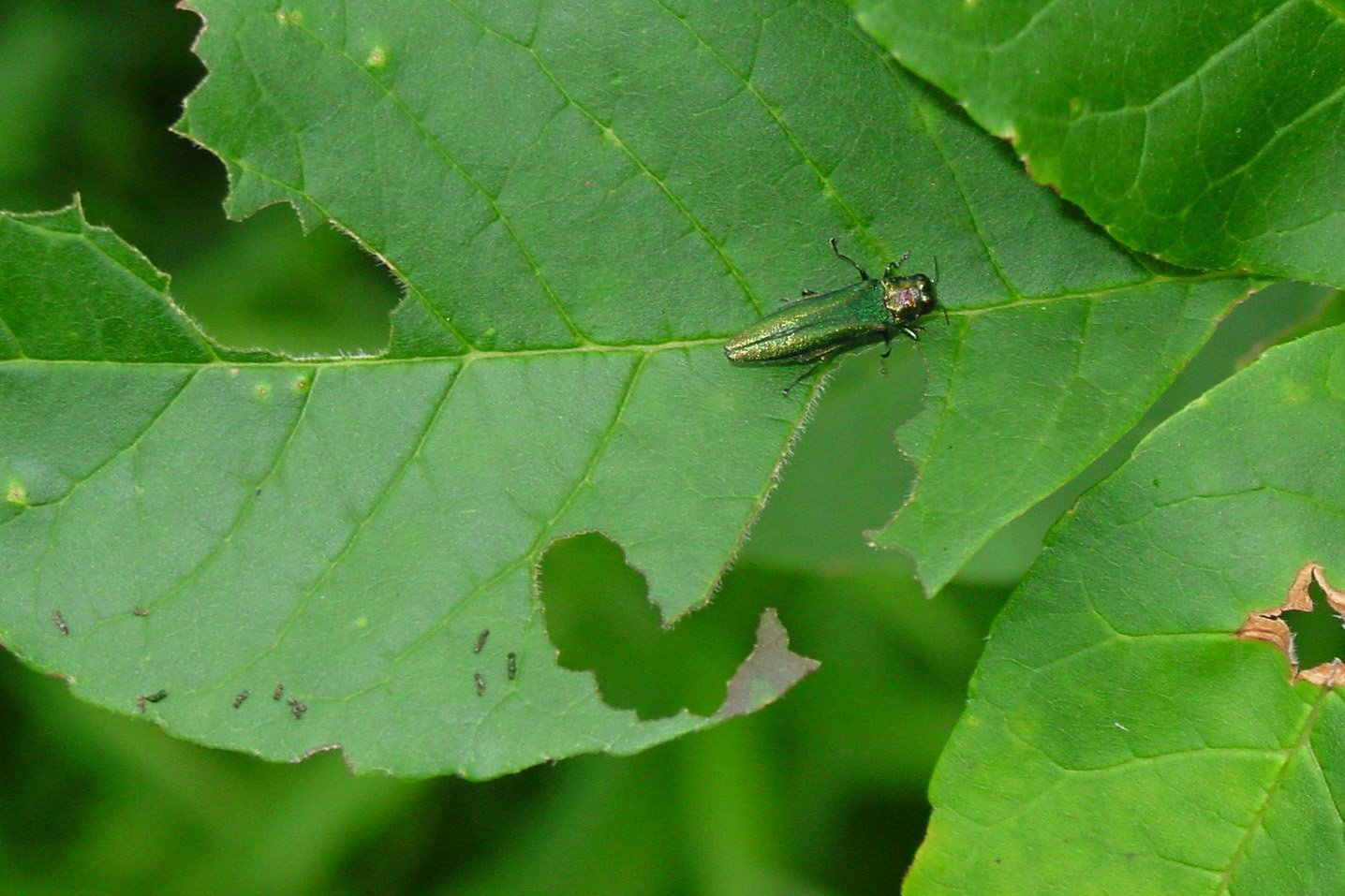
Our fungicide and pest management program is a series of spring treatments that protects trees from the diseases and insects that weaken them over time.
While especially valuable for conifers, this program can also be used on other ornamental trees and fruit trees throughout the landscape to manage disease and insect pressure. It is a strong option when a full-season check-and-treat program is not selected, providing focused, preventative protection during the most critical part of the growing season.

Growth Regulator Treatments
For customers seeking comprehensive care, we offer an annual whole-property plan that provides consistent monitoring and treatment of ornamental trees and shrubs throughout the growing season.
- Six scheduled visits from April through September
- Monthly inspection of ornamental trees and shrubs
- Targeted sprays for fungal issues and insects as needed
- Focus on early detection and prevention of problems
Because we are on your property every month, we can care for all of the trees across your landscape and handle seasonal problems as they appear. If issues are identified that are not fully addressed by these treatments, we will make clear recommendations for additional services to protect tree health and long-term performance.

Full-Season Ornamentals Check & Treat Program
For customers seeking comprehensive care, we offer an annual whole-property plan that provides consistent monitoring and treatment of ornamental trees and shrubs throughout the growing season.
- Six scheduled visits from April through September
- Monthly inspection of ornamental trees and shrubs
- Targeted sprays for fungal issues and insects as needed
- Focus on early detection and prevention of problems
Because we are on your property every month, we can care for all of the trees across your landscape and handle seasonal problems as they appear. If issues are identified that are not fully addressed by these treatments, we will make clear recommendations for additional services to protect tree health and long-term performance.

Tree Planting and Replacement
With decades of experience removing and treating trees that failed to thrive, we’ve developed a proven approach to help you plant with confidence. We offer a hand selected list of hardy, reliable, and beautiful trees that perform well in local soil and weather conditions.
We source healthy trees, at the ideal size for transplant, ensuring strong root development and long-term success.
Our tree planting program is built to take the stress and guesswork out of tree planting.

Request a Tree Care consultation
You may already have someone taking care of your lawn, but do you have a tree expert taking care of your trees?
Ratliff Tree’s Plant Health Care team, led by a certified master arborist, can evaluate your property, confirm what’s going on, and recommend a treatment plan that fits your trees.
When We Treat Trees in Mid-Missouri
| Season | What We Typically Do |
|---|---|
| Spring | Fungicide and pest management begins, usually with three applications. We also apply phosphite (antifungal) and deep root feedings, and full-season program visits start in April. |
| Summer | Monthly full-season visits continue. We treat for Japanese beetles during peak activity from late June through August and watch for bagworms in August. |
| Fall | We apply deep root feedings and phosphite (antifungal) treatments. Late summer and fall are especially beneficial for root-focused care, and full-season visits wrap up in September. |
| Winter | We prune during the dormant season, from late November through February, which includes red oaks to help prevent the spread of oak wilt. |
| Any time | Urgent treatments can happen whenever a tree is in trouble. |
Meet Your Master Arborist
Ratliff Tree’s Plant Health Care division is led by Philip King, an ISA Board Certified Master Arborist (MW-5273B). Philip has been doing tree work professionally since 2002. He earned his ISA Certified Arborist credential in 2012 and his Board Certified Master Arborist designation in 2022. He is also ISA Tree Risk Assessment Qualified.

Tree Health Care Across Mid-Missouri
We provide tree health care in Columbia and Ashland, along with Rocheport and the surrounding Mid-Missouri communities.
Trees in town face challenges they would not face in a natural setting. Many were planted as the wrong tree in the wrong spot, and the soil around them is generally compacted. Some are exotic to this area, which makes them harder to sustain. Irrigation adds to the problem, because the watering that keeps a lawn green can overwater a tree and lead to root rot. Any tree under stress is more susceptible to pests and disease, which is why so much of our work focuses on reducing that stress.
What to Expect From a Tree Health Consultation
Step 1: You Tell Us What You're Seeing
Call, text, or send a request online with a short description of the tree and what concerns you.
Step 2: We follow up to ask for details
A member of our team will reach out within one to two business days to get more details and set up your visit.
Step 3: We evaluate your tree.
Philip will visit on site to evaluate your tree. During this time, he’ll take photos and measurements, and discuss options.
Step 4: We share our treatment plan.
Within one to two business days after the site visit, Philip will send you an itemized list of recommended treatments and pricing.
Step 5: We get to work.
Once our proposal is approved, we’ll begin working on our treatment plan.
let Us Help answer your questions
They are two names for the same kind of treatment. We call our program deep root feeding because it does more than fertilize a tree. It is a root- and soil- focused treatment that helps address compaction and supports soil biology. It often includes phosphite for added disease protection.
Ongoing care and proactive treatment is best. It is much easier to keep a healthy tree healthy than to bring one back after serious decline has started, and the benefits of regular supportive care build over time.
Most of our treatments happen in spring and fall, and preventative spring applications give evergreens and ornamentals the best protection. If your tree is struggling now, there is no need to wait for a certain season, because urgent treatments can happen at any time of year and deep root feeding can be performed throughout the growing season.
It depends on how far the decline has gone, and problems are much easier to manage when they are caught early. We will always give you an honest recommendation. If treatment will not produce a good long-term outcome, we will explain why and discuss responsible alternatives, including removal when a tree cannot be saved.
There’s no guarantee with tree treatments because mother nature doesn’t always play nice. We will do our best to give your tree a chance to recover and thrive, and we will be honest with you about what to expect.
You’re welcome to be home, but it’s not required as long as we have access and clear instructions. If you choose an anytime appointment, Philip can evaluate your tree without you there, and if you would rather walk the property together, we will schedule a time to meet.